 |
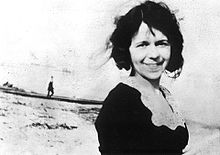
| Dawn Powell |
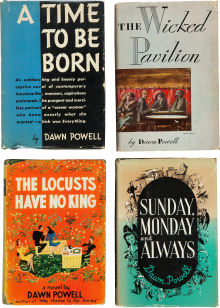 Powell’s novels are sharp–hysterically funny–observant records of life among the literati and those who strive to make a name for themselves and become famous. Although some of her work is set in the Midwest, many of her novels are set in–and richly portray–New York City. A modern day Edith Wharton, Powell saw herself as a chronicler of the times, part satirist, part social critic, and 100% brilliant.
Hotel Lafayette’s Cafe Lafayette, which was transformed into the fictitious Cafe Julien in her novel The Wicked Pavilion (1954).
She moved among writers, a part of the literary world as much as she was a part of her adopted city. And while she struggled in many aspects of her life, she remained committed to her work, always striving to create good work.
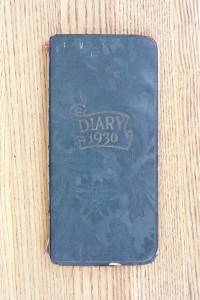 |
| One of the many diaries soon to be auctioned |
 |
| Powell’s handwriting |
One only wishes that Powell were still around to write about this literary shenanigan. She was so deft at poking holes in people’s grand schemes, particularly when it comes to fame and fortune. In her novel, A Time to Be Born, which skewers many New York City characters– most notably Henry Luce and Clare Boothe Luce–she observes how bothersome some writers find it to actually have to write and produce their own work and insights. Much easier, as in the case of her characters, to hire someone else to write, invite intellectuals to dinner, and appropriate the work of others for your own fame. After all, who has the time to actually write any more?
Postscript to this post: There were no serious bids once the auction had closed, according to a July 23, 2012 post on the New Yorker.
And another postscript: On March 13, 2013 the New York Times reported that Columbia University had acquired the diaries from Mr. Page for an undisclosed price.
 The American Past: NYC in Focus